

Japan is no longer just on the corporate travel radar it has moved to the top of it. For companies looking to reward high performers with something that genuinely lands, famous destinations in Japan incentive travel programs are delivering experiences that outlast any awards gala or beach resort weekend. This is a country where ancient ritual and precision engineering coexist on the same city block, where hospitality isn't a service standard but a cultural philosophy. And for the right group, that makes all the difference.
Why Japan Is the Best Incentive Travel Destination Right Now
If you're building an incentive program that needs to motivate, reward, and create shared memory Japan clears every benchmark. Here's why:
- Exclusivity at scale: Japan offers VIP access that most destinations can't replicate private temple ceremonies, kaiseki dinners in 300-year-old machiya, sake breweries closed to the public. An expert DMC can unlock all of it.
- Cultural contrast: The juxtaposition of the ultra-modern and the deeply traditional creates natural conversation, reflection, and cohesion among groups — a rare by-product of an incentive destination.
- Operational excellence: Japan's infrastructure bullet trains, world-class hotels, impeccable service culture — means logistics run to a standard that protects your brand and your attendees' time.
- Emotional impact: Participants remember Japan. Not because it's exotic, but because it's precise, surprising, and genuinely unlike anywhere else.
For event planners evaluating best Japan destinations for corporate travel, the question is no longer whether Japan works — it's which combination of cities will build the most powerful program arc.
Tokyo: Where Modernity Meets Ancient Ritual
Tokyo is a city that rewards close attention. On the surface, it's 14 million people, neon signage, and the most Michelin-starred restaurants on the planet. Look closer and you find neighborhood shotengai (shopping streets) unchanged since the 1960s, shrines pressed between skyscrapers, and a social code so refined it functions almost like performance art.
For corporate groups, Tokyo sets the tone. It absorbs large numbers without feeling generic, and it scales beautifully from plenary sessions to intimate dinners.
What an expert DMC can arrange:
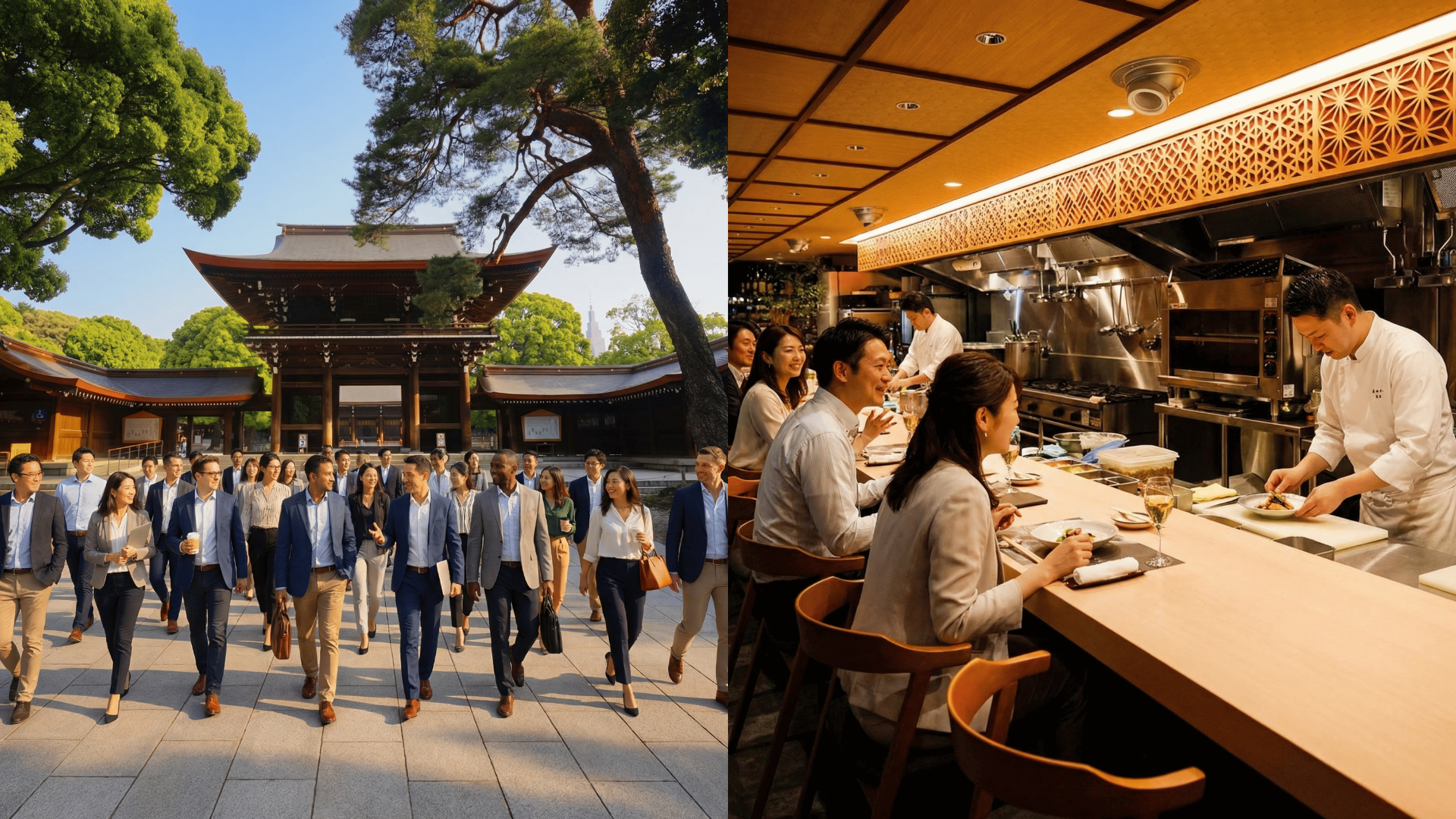
A private morning access to Meiji Jingu Shrine before the gates open to the public combined with a blessing ceremony led by a Shinto priest. For a group of 20 or 200, the silence of that forested path at 6 a.m. creates a collective experience no conference room can replicate.
For the evening, a buyout of a Ginza kappo counter the highest expression of Japanese fine dining, where a single chef orchestrates a 12-course conversation with the table. These venues don't take group reservations publicly. They require an introduction.
Kyoto: The Cultural Anchor Every Japan Incentive Trip Needs
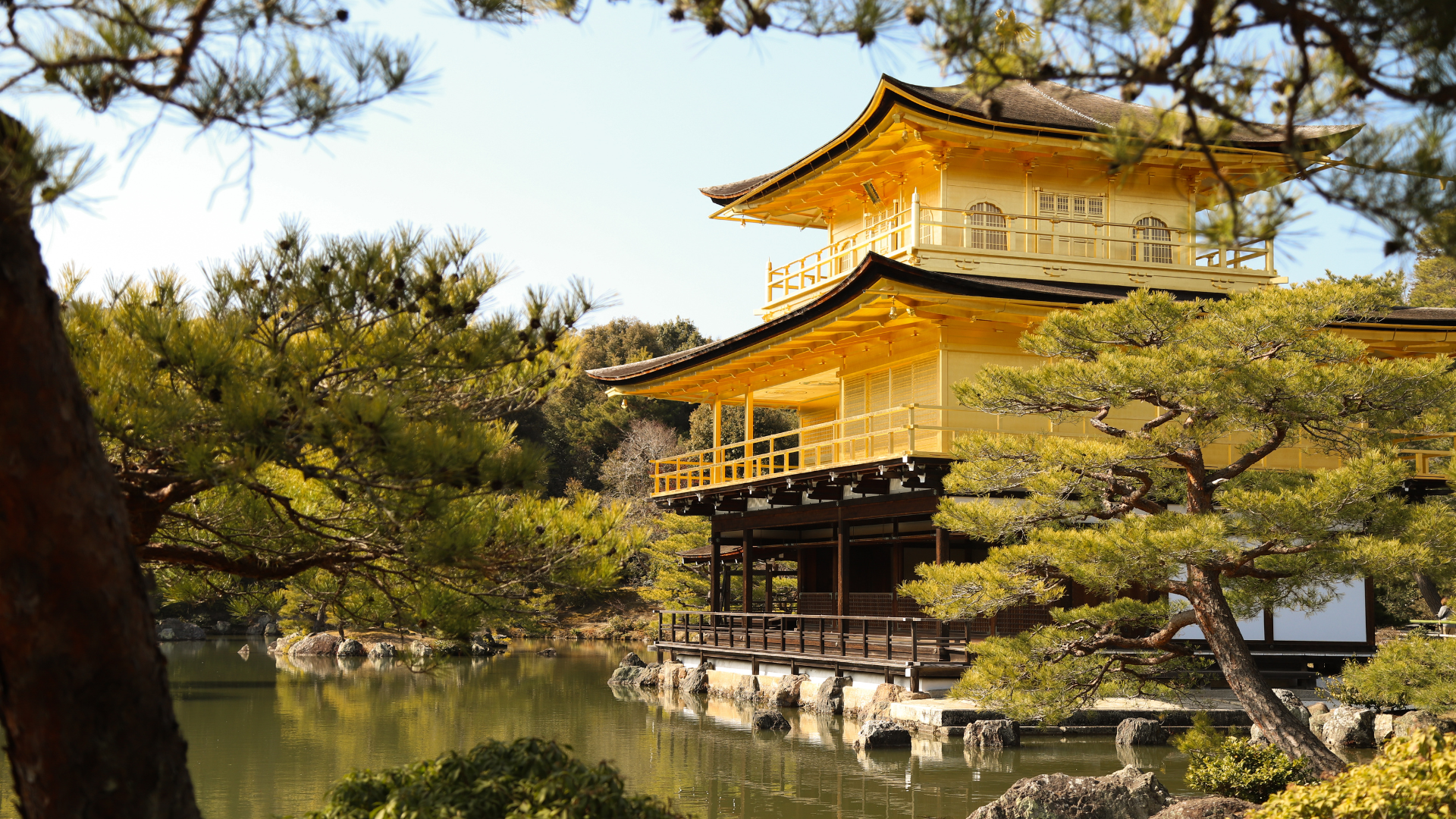
No Japan incentive trip ideas are complete without Kyoto. This is where the country's cultural identity is most concentrated 17 UNESCO World Heritage Sites, over 1,600 Buddhist temples, and a geisha district (Gion) that has operated continuously since the 17th century.
Kyoto works best as the reflective counterpart to Tokyo's energy. Program it mid-trip, and it functions as both reward and reset.
What an expert DMC can arrange:
A private tea ceremony in a kenchiku-style garden villa not the tourist version in a converted hall, but a genuine ura-senke style ceremony conducted by a certified tea master in a residence that doesn't appear on any booking platform.
For evenings, a dinner with a maiko (apprentice geisha) in a private ozashiki room in Gion. The protocol, the seasonal kaiseki menu, the art of conversation through an interpreter who understands both cultures this is the kind of access that shapes how participants talk about a company for years.
Osaka: The Business Case for Joy
Osaka has always been Japan's counterpoint to Kyoto's refinement louder, warmer, built on merchant culture and an unapologetic pride in food. The Osakan phrase kuidaore (eat until you drop) is both joke and genuine civic value.
For incentive programs, Osaka plays an important strategic role: it humanizes the itinerary. After the ceremony of Kyoto and the pace of Tokyo, Osaka gives groups permission to relax, compete, and laugh together.
What an expert DMC can arrange:
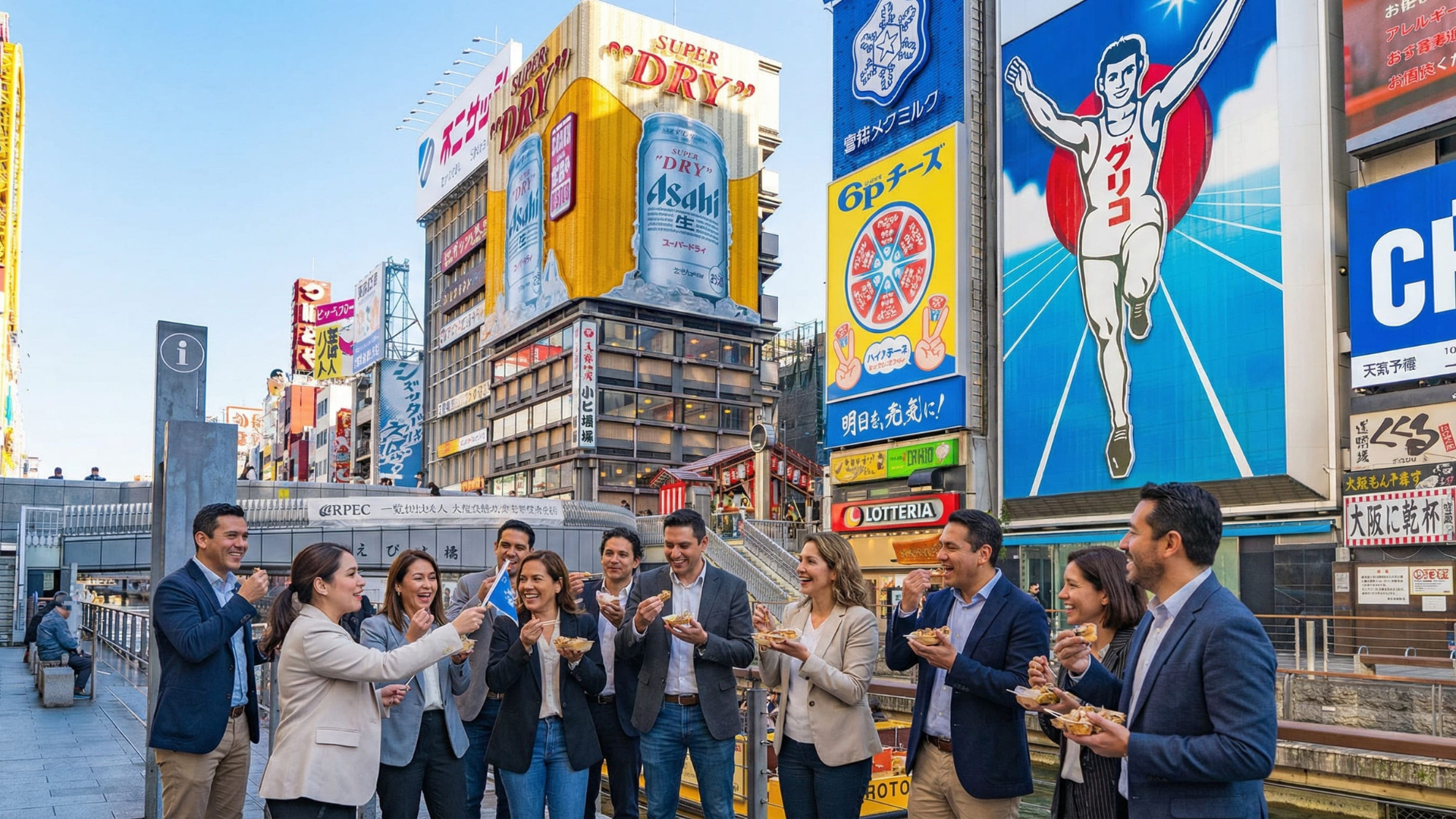
A private Dotonbori street food tour after closing hours, with the city's best ramen chef, takoyaki master, and a yakitori specialist each at a different stop, paired with craft Japanese whisky. No crowds, no queues, no performance for tourists.
For groups with a competitive edge, a private wagyu tasting and grading session at a Kobe beef certified distributor an educational experience that doubles as entertainment and generates genuine conversation.
Hakone & Mount Fuji: The Visual Landmark That Earns Its Place
Hakone sits at the intersection of Japan's natural drama and its ryokan (traditional inn) culture. From the right vantage across Lake Ashi on a clear morning Mount Fuji rises above the cloud line in exactly the way photographs suggest but somehow still manage to understate.
For incentive groups, Hakone delivers the iconic imagery companies use in communications for years after the trip. It's a visual anchor. But its value goes beyond the photograph.
What an expert DMC can arrange:
A full buyout of a luxury onsen ryokan kaiseki dinner, private outdoor hot spring baths, and a formal yukata orientation. In a traditional ryokan, the pace slows deliberately: dinner begins at 6, courses arrive on their own schedule, conversation deepens. For corporate groups that spend their working lives in 30-minute slots, this is a designed deceleration that builds real connection.
For the more adventurous cohort, a pre-dawn Fuji fifth-station excursion with a mountain guide and a private bento breakfast at altitude timed precisely for sunrise over the volcanic crater.

Hiroshima: Purpose, Perspective, and the Most Powerful Evening in Any Japan Program
Hiroshima is where the best incentive programs find their meaning. The Peace Memorial Museum and the A-Bomb Dome are not recreational stops and that's precisely why they belong in a program designed for leaders.
For executive groups and senior performers, a half-day in Hiroshima creates the kind of shared emotional reference point that no team-building exercise can manufacture. It asks something of the group. And groups that have been through it rarely forget it.
What an expert DMC can arrange:
A private meeting with a hibakusha (atomic bomb survivor) an encounter that is facilitated only through specific cultural organizations and requires proper introductions and sensitivity protocols. These conversations are offered to a small number of international groups each year and represent perhaps the most profound hour in any Japan itinerary.
Follow it with dinner on Miyajima Island a 15-minute ferry from Hiroshima at a private restaurant overlooking the floating torii gate of Itsukushima Shrine, illuminated at high tide after dark. The contrast between the gravity of the day and the beauty of the evening is, for most groups, transformative.
.png)
Nara: Where Ritual Happens at Walking Pace
Nara is often treated as a half-day add-on between Kyoto and Osaka. That is a significant underestimation of what it offers. Japan's first permanent capital, Nara holds the country's oldest Buddhist monuments and one of its most surprising atmospheres: over 1,200 free-roaming deer that Shinto tradition considers sacred messengers of the gods.
For incentive programs, Nara offers something rare a destination where the most memorable moments happen slowly and without a schedule.
What an expert DMC can arrange:
A private dawn ceremony at Kasuga Grand Shrine one of Japan's oldest, established in 768 AD conducted before visitors arrive, with the 3,000 stone lanterns that line the forested approach still lit from the night. Few experiences in Japan are as atmospherically complete.
For smaller executive groups, a private lacquerware or calligraphy workshop with a Nara-school artisan a 90-minute session that produces a tangible, custom object each participant takes home. Not a souvenir. A made thing, with their hand in it.

Hokkaido: The Frontier Incentive Destination for Best Japan Destinations Corporate Travel
Hokkaido is Japan's northernmost island and its least visited by international incentive programs which is exactly why it belongs in this conversation. For companies looking for best Japan destinations in corporate travel that signal genuine curation rather than itinerary-by-committee, Hokkaido delivers a program within a program.
In winter, it offers world-class powder snow at Niseko or Furano some of the deepest on the planet. In summer, lavender fields, craft dairy culture, and wilderness that doesn't appear in any standard Japan tour. Year-round, the food culture is extraordinary: Hokkaido produces Japan's finest seafood, dairy, and Jingisukan lamb.
What an expert DMC can arrange:
In winter: a private heli-ski day in the Niseko backcountry for the group's top tier, paired with an onsen and a seafood dinner in Otaru's historic canal district a logical double reward for a tiered incentive structure.
In summer or autumn: a private farm-to-table dinner in Furano's lavender valley, hosted by a Hokkaido chef who sources exclusively within 30 kilometers, with a sake and shochu pairing that introduces the island's own brewing tradition.
Building Your Japan Incentive Program: What to Keep in Mind
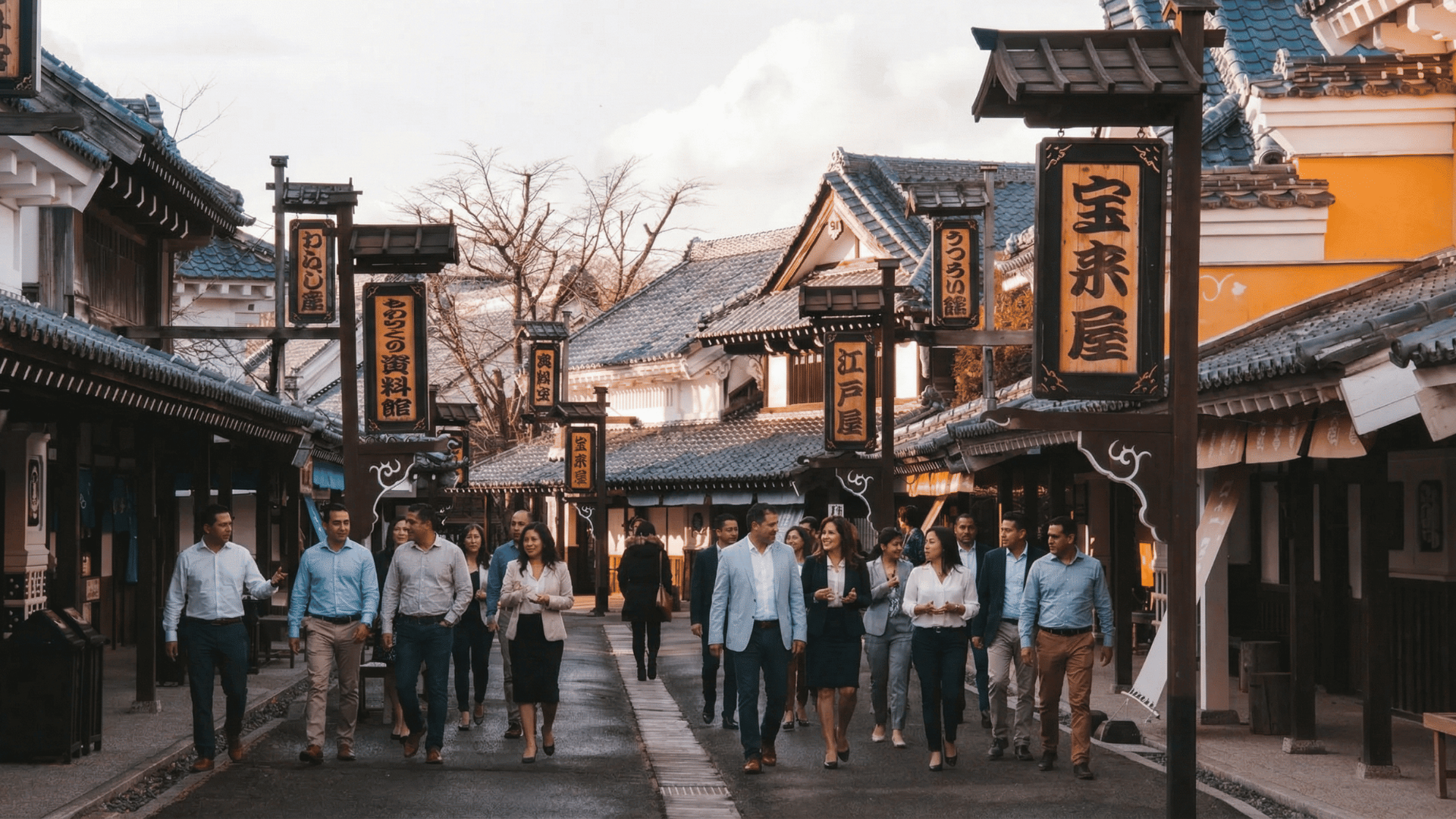
The seven destinations above are not interchangeable stops on a map they are distinct emotional experiences that, sequenced correctly, build a program arc with a beginning, a climax, and a resolution.
A few principles that experienced DMCs apply when structuring Japan programs for corporate groups:
- Start in Tokyo, end in Kyoto or Hokkaido Tokyo absorbs the energy of arrival; quieter destinations close the program on reflection.
- Build in one "slow day" Japan's detail-density is high. A ryokan stay or a morning with no agenda is not wasted time. It's the day participants talk about most.
- Don't try to cover everything A five-city program in six days produces fatigue, not memory. Depth beats breadth in Japan more than anywhere.
- Work with a DMC that has genuine access The difference between a standard Japan group tour and a Japan incentive program that changes how your team sees your company is almost entirely in the relationships your operator brings to the table.
Ready to Design a Japan Incentive Program Worth Talking About?
Japan rewards the planners who approach it seriously. The destinations are famous for good reason but what makes a program exceptional is never the destination itself. It's the decisions made before the group boards the plane: which experiences to protect, which to sequence together, and which single moment to build the whole itinerary around.
If you're at the stage of evaluating Japan for your next incentive program or if you're already convinced and need a ground operator who knows how to execute at the level your clients expect we'd be glad to walk through a preliminary concept. No generic proposals. A conversation first, a program second.



.png)
